Concrete Steps & Stairs
Safe, durable steps that provide secure access to your home, yard, and outdoor spaces for years to come.
Why Concrete Steps Make Sense
Your steps are one of the most used parts of your property. Every time you enter or leave your home, you trust them to be safe and stable. Concrete steps deliver that reliability better than any other material. They will not rot like wood, rust like metal, or shift like stone pavers. A properly built set of concrete steps will last 30 to 50 years with minimal maintenance. That kind of longevity makes concrete steps one of the best investments you can make in your property.
Safety is another huge advantage. Concrete steps stay level and stable. They do not develop loose boards, wobbly railings, or uneven risers that cause trips and falls. You can add texture to the surface for better traction in wet weather. In University, FL where we get afternoon rain almost daily during summer, slip-resistant steps matter. Concrete gives you that security without the maintenance headaches of other materials.
Types of Concrete Steps We Build
- Front entrance steps from ground level to door threshold
- Back door and patio access steps for outdoor living areas
- Deck and elevated porch stairs connecting different levels
- Basement and cellar access stairs for below-grade spaces
- Multi-level terraced steps for sloped yards and gardens
- Pool entry steps and ladder alternatives for above-ground pools
- Commercial building entrance stairs meeting code requirements
When we design and build concrete steps for your University, FL property, we follow building codes for safety and durability. Step dimensions matter more than you might think. Risers should be uniform height, typically 7 to 8 inches. Treads should be deep enough for comfortable footing, usually 11 inches minimum. Handrails are required for stairs over a certain height. We handle all these details so your steps are both safe and legal.
Design and Customization
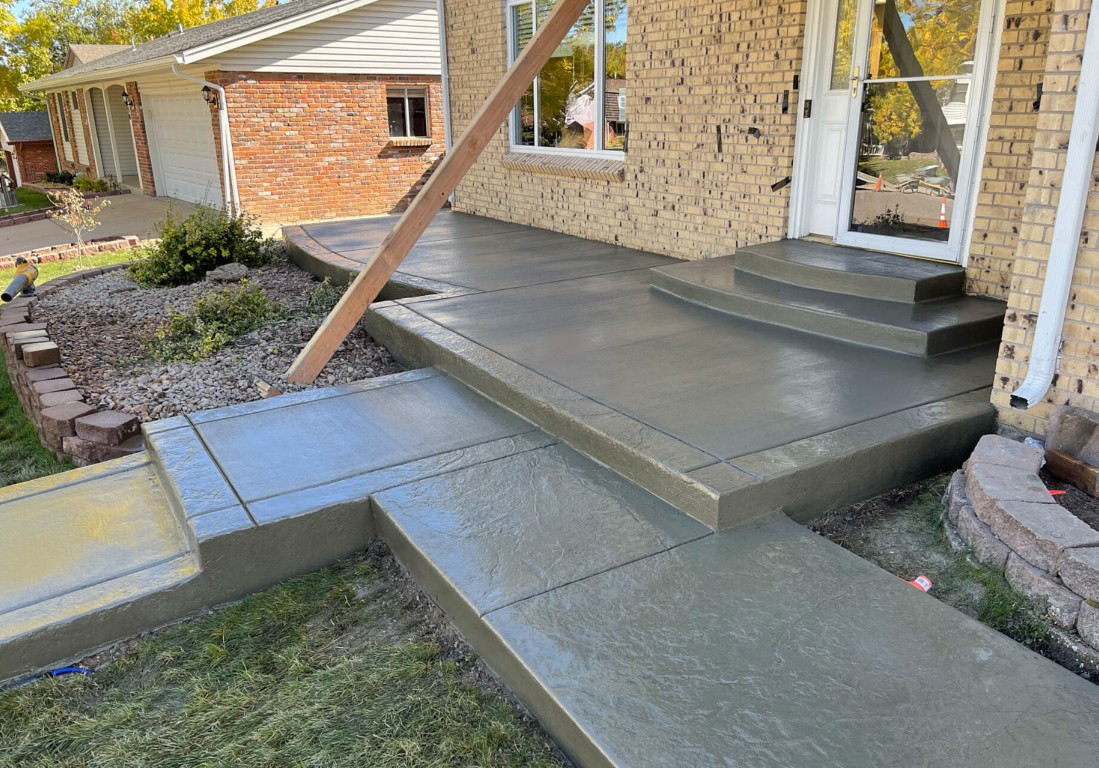
Concrete steps do not have to look plain or industrial. Modern techniques let you customize the appearance to match your home style. Broom finish adds texture and improves traction. Exposed aggregate creates visual interest and shows decorative stones. For a high-end look, stamped concrete can mimic natural stone, slate, or brick patterns. These finishes transform basic steps into architectural features.
Color options give you even more flexibility. Integral color mixes pigment throughout the concrete for lasting, uniform color. Stains and dyes can create earth tones, grays, or richer colors. You can add borders, bands, or contrasting colors on treads versus risers. These details elevate the design and help your steps blend with or complement your home exterior.
Shape and style matter too. Straight stairs provide direct access and work well for contemporary homes. Curved or angled steps add elegance and suit traditional architecture. We can incorporate landings to break up long runs of steps or provide gathering space at entries. Side walls, decorative railings, and integrated planters add both function and visual appeal. During design, we discuss your preferences and suggest options that fit your home style and budget.
Width is another consideration. Minimum code width is typically 36 inches, but wider steps feel more welcoming and allow two people to pass comfortably. Main entrance steps are often 48 to 60 inches wide. Side or secondary steps can be narrower to save space and cost. We help you determine the right width based on how you will use the steps and what looks proportional to your home.
Construction Process
Building concrete steps requires careful planning and precise execution. We start by measuring the total rise from bottom to top. This determines how many steps you need. We divide the total rise by the ideal riser height, usually 7 to 7.5 inches. The result tells us the number of steps. We then calculate tread depth and total run to ensure the stairs fit the available space and meet code requirements.
After planning dimensions, we excavate and prepare the base. Like our foundation work, a solid base prevents settling and cracking. We dig below frost line if required by code and add compacted gravel. For steps attached to existing structures, we ensure proper connection to prevent separation. We also install footings below grade to support the weight and prevent sinking.
Forming steps is more complex than forming flat slabs. Each riser needs its own form board set at the exact height and angle. The forms must be strong enough to hold the weight of wet concrete without bulging or shifting. We brace everything securely and double-check all measurements before pouring. Even small errors in step height create trip hazards, so precision matters.
The concrete pour happens from bottom to top. We place concrete in each step, working it into corners and around reinforcement. As each step is filled, we smooth and finish the tread surface. We add texture for traction and tool the edges for a clean appearance. After the concrete begins to set, we carefully remove forms and cure the concrete properly. Most step projects take 2 to 4 days from excavation through final finishing. You should wait at least a week before heavy use to let the concrete gain full strength.