Retaining Walls & Concrete Masonry
Strong, engineered walls that hold back soil, prevent erosion, and create usable space on sloped properties.
Why You Need a Retaining Wall
If your property has slopes or elevation changes, a retaining wall can solve multiple problems. The most obvious benefit is erosion control. Without a wall, rain washes soil downhill creating gullies and exposing plant roots. Over time, this erosion can undermine driveways, patios, and even building foundations. A properly built retaining wall holds soil in place and protects your property from water damage.
Retaining walls also create usable space on sloped lots. Instead of a steep hillside you cannot use, a retaining wall lets you build terraced levels for patios, gardens, or lawn areas. This is especially valuable in University, FL where flat building lots are limited. You can turn unusable slope into functional outdoor living space that adds both beauty and value to your property. The terraced levels also make landscaping easier and more attractive.
Common Retaining Wall Applications
- Hillside stabilization to prevent soil erosion and sliding
- Driveway support walls for sloped access and parking areas
- Terraced gardens and multi-level landscaping
- Pool deck retaining walls on sloped properties
- Property line walls and decorative borders
- Basement and foundation waterproofing walls
- Drainage management and stormwater control
Not all retaining walls require professional engineering, but many do. Walls over 4 feet tall typically need engineered designs to ensure they can handle the soil pressure. Even shorter walls may need engineering if they support structures like driveways or buildings. We work with structural engineers when needed to design walls that meet code requirements and perform safely for decades. Well-built concrete retaining walls hold their position for decades when drainage and foundation work are done right.
Types of Retaining Walls
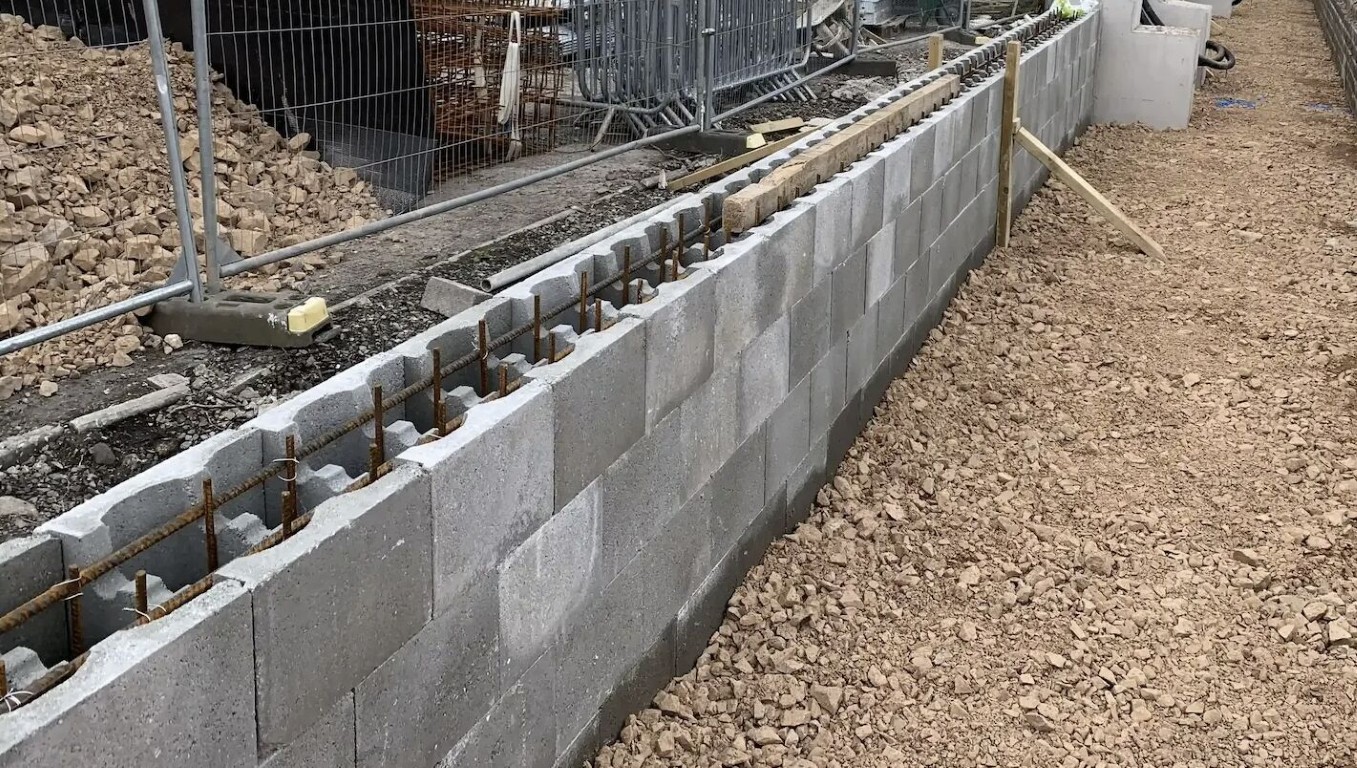
We build several types of retaining walls depending on your needs and site conditions. Concrete block walls use interlocking masonry units designed specifically for retaining applications. These blocks are stronger and heavier than standard concrete blocks. They stack together with pins or interlocking features that create a solid structure. Block walls work well for heights up to 6 to 8 feet and offer a finished appearance without additional facing.
Poured concrete walls provide maximum strength for tall walls or heavy loads. We build forms, place reinforcement, and pour concrete to create monolithic walls. These walls can handle any height and any soil pressure. They require more labor and materials than block walls but last virtually forever when properly built. We can finish them smooth, textured, or clad with stone or brick veneer for aesthetic appeal.
Segmental retaining wall systems use specialized blocks with lips or textures that interlock. These systems are engineered for specific heights and applications. Many feature attractive stone-like faces in various colors. They install faster than poured walls and look more refined than plain concrete blocks. We recommend these for residential applications where appearance matters as much as function.
Each wall type has advantages and appropriate applications. Block walls balance cost and performance for moderate heights. Poured concrete handles extreme conditions and tall walls. Segmental systems provide attractive finished appearance. During consultation, we review your site conditions, wall height needed, and budget to recommend the best solution. Whether you need a simple patio retaining wall or a large hillside stabilization project, we have the experience to build it right.
Proper Installation and Drainage
Building a retaining wall requires more than just stacking blocks. The success and longevity of any retaining wall depends on proper foundation and drainage. We start by excavating below grade to create a stable base. This typically means digging 6 to 12 inches below the finished grade depending on wall height. We add and compact crushed stone to create a level, stable foundation that will not settle.
Drainage is critical for retaining walls. Water trapped behind the wall creates hydrostatic pressure that can push the wall over. We prevent this by installing drainage pipe behind the wall at the base. The pipe collects water and channels it away to designated drainage areas. We also backfill behind the wall with crushed stone instead of soil. This gravel layer lets water drain down to the collection pipe instead of building up pressure.
As we build the wall up, we ensure proper alignment and stability. Each course must be level and set back slightly from the one below. This setback, called batter, leans the wall back into the soil for better stability. We tie the wall into the hillside with geogrids or tiebacks for taller walls. These reinforcements extend back into the soil and anchor the wall against sliding. All these details matter for walls that perform correctly and last for decades.
After completing the wall, we backfill carefully in layers and compact each layer. This prevents voids that could allow settling. We slope the area behind the wall to direct surface water away from the wall. These finishing touches complete the installation and ensure your wall drains properly. Like our foundation work, proper preparation and attention to drainage make all the difference in long-term performance.
Frequently Asked Questions
Need a Retaining Wall?
Get a free site assessment and quote for your retaining wall project.
(352) 358-2095